Guide
Masonic Symbols and What They Mean
· 4 minute read
Freemasonry teaches by symbols. Most of them are the furniture of an old building site, some are borrowed from geometry and a few from the Bible, and each is explained to a candidate as a figure of something he should do or remember. This is a glossary of the ones that appear most often on aprons, certificates, tracing boards and our own designs, with the public meaning each carries. None of it is secret. All of it is printed in the monitors that Grand Lodges publish.
The three great lights
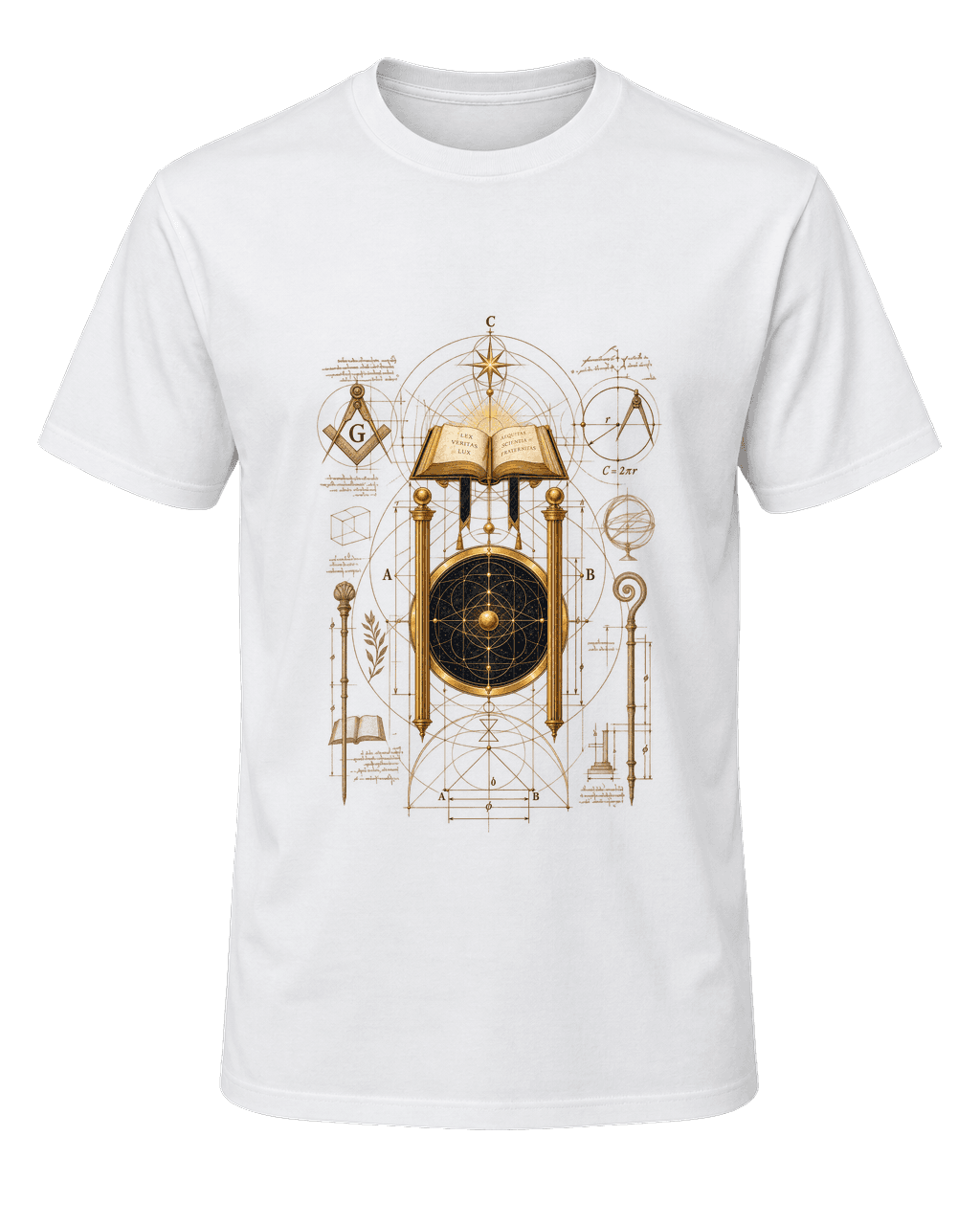
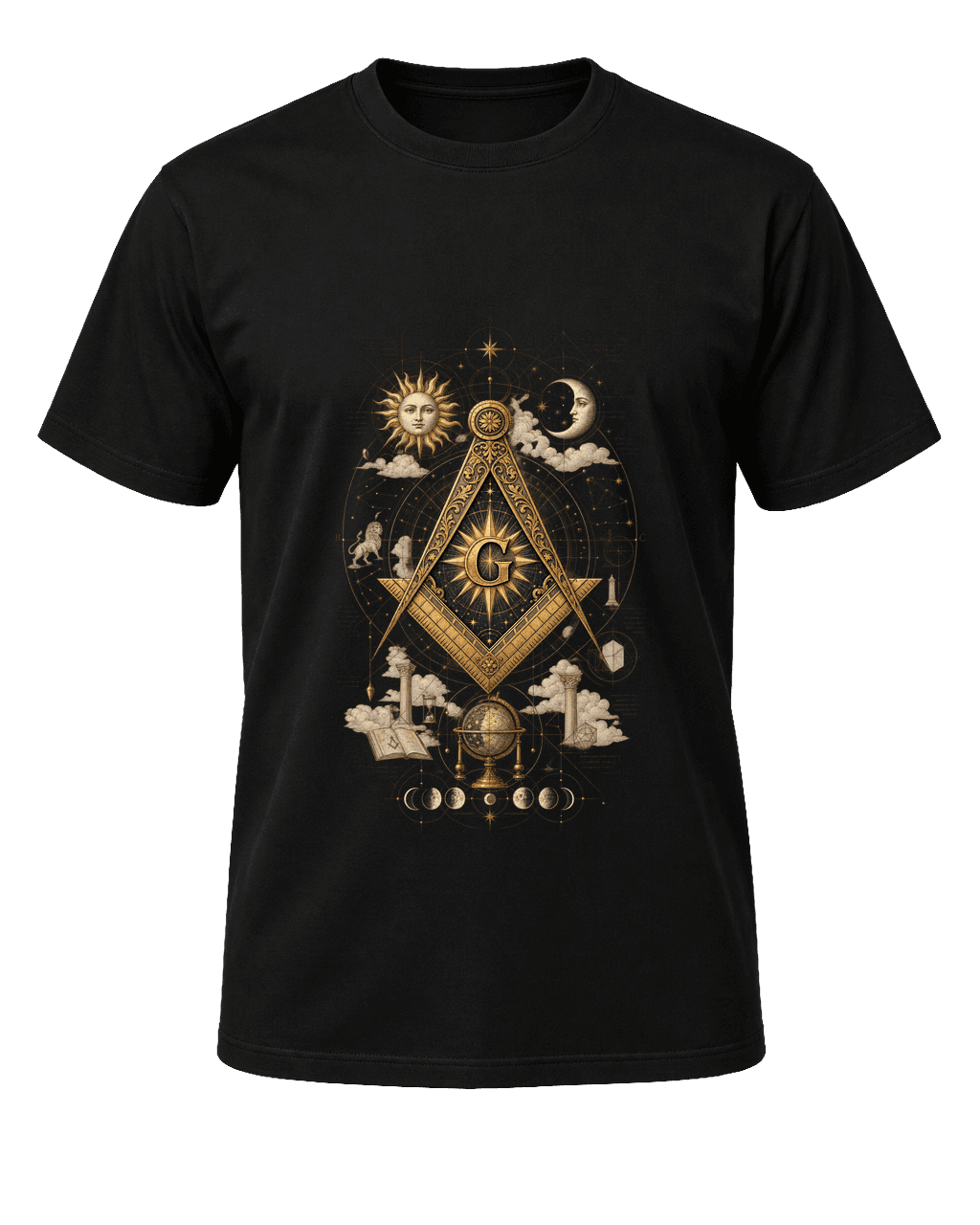
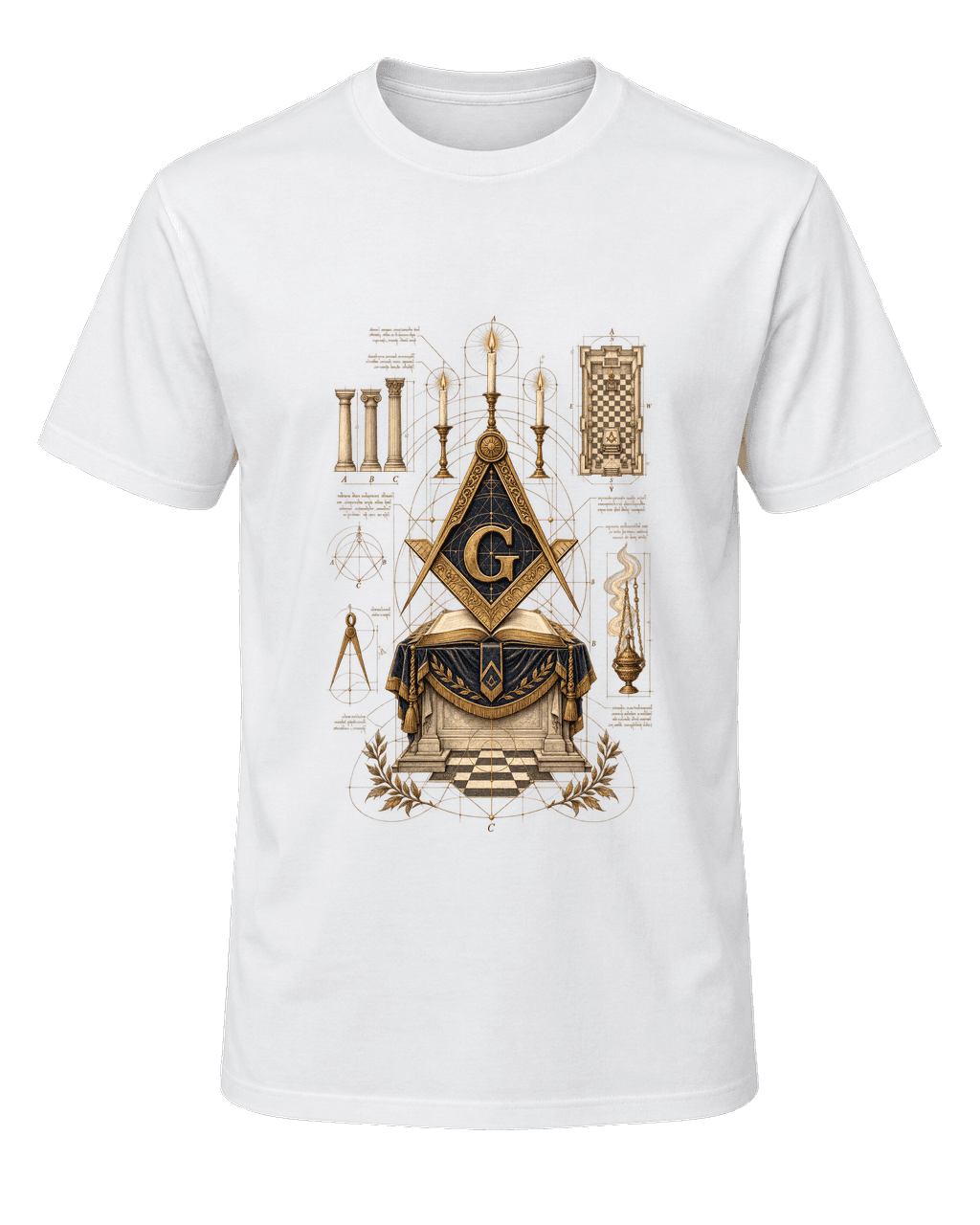
The Volume of the Sacred Law, the square and the compasses. Every lodge is opened with the three together on the altar, the book open and the square and compasses resting on it. The book is whichever scripture the brethren hold sacred, and a lodge with brethren of several faiths may keep several open. The three lesser lights are the sun, the moon and the Master of the lodge, represented by three candles.
The mosaic pavement, the blazing star and the tessellated border
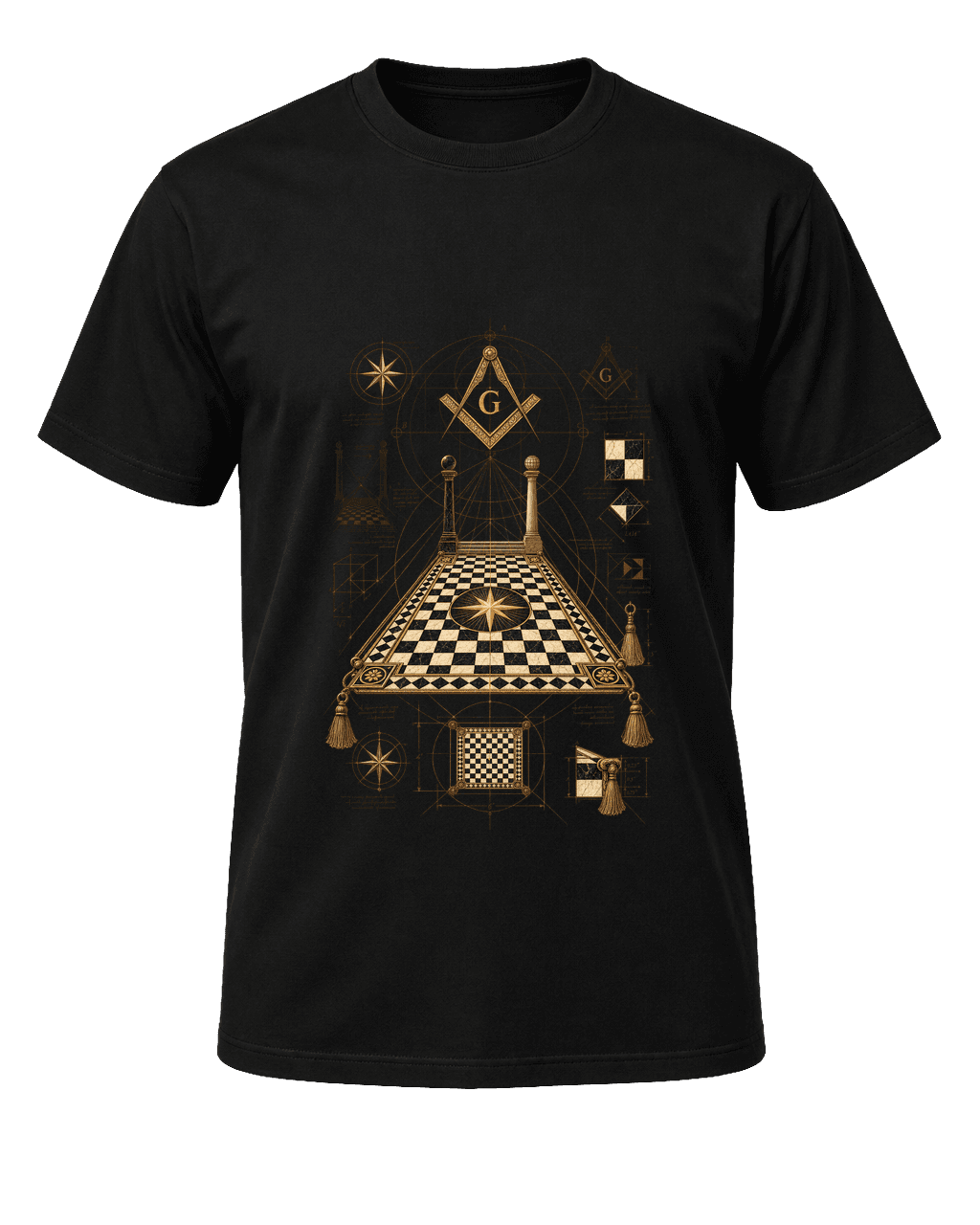
The chequered floor of the lodge is called the mosaic pavement, and it is read as human life, chequered with good and evil. The blazing star at its centre is a figure of Divine Providence, the light a Mason is guided by. The indented border that runs around the floor is the tessellated border, and it stands for the blessings and comforts that surround a life so lived.
The rough and perfect ashlars
An ashlar is a building stone. The rough ashlar is the stone as it comes from the quarry, and it represents the candidate in his natural state. The perfect ashlar is the stone squared and smoothed and ready for the builder's use, and it represents the man the Craft is meant to make of him. Most lodge rooms keep one of each.
The point within a circle
A point at the centre of a circle, with two parallel vertical lines touching the circle on either side and the Volume of the Sacred Law resting on top. The point is the individual brother, the circle is the boundary of his conduct, and the two lines are the two Saints John, the Baptist and the Evangelist, the patrons of the Craft. A brother who keeps within the circle cannot materially err.
The forty seventh problem of Euclid
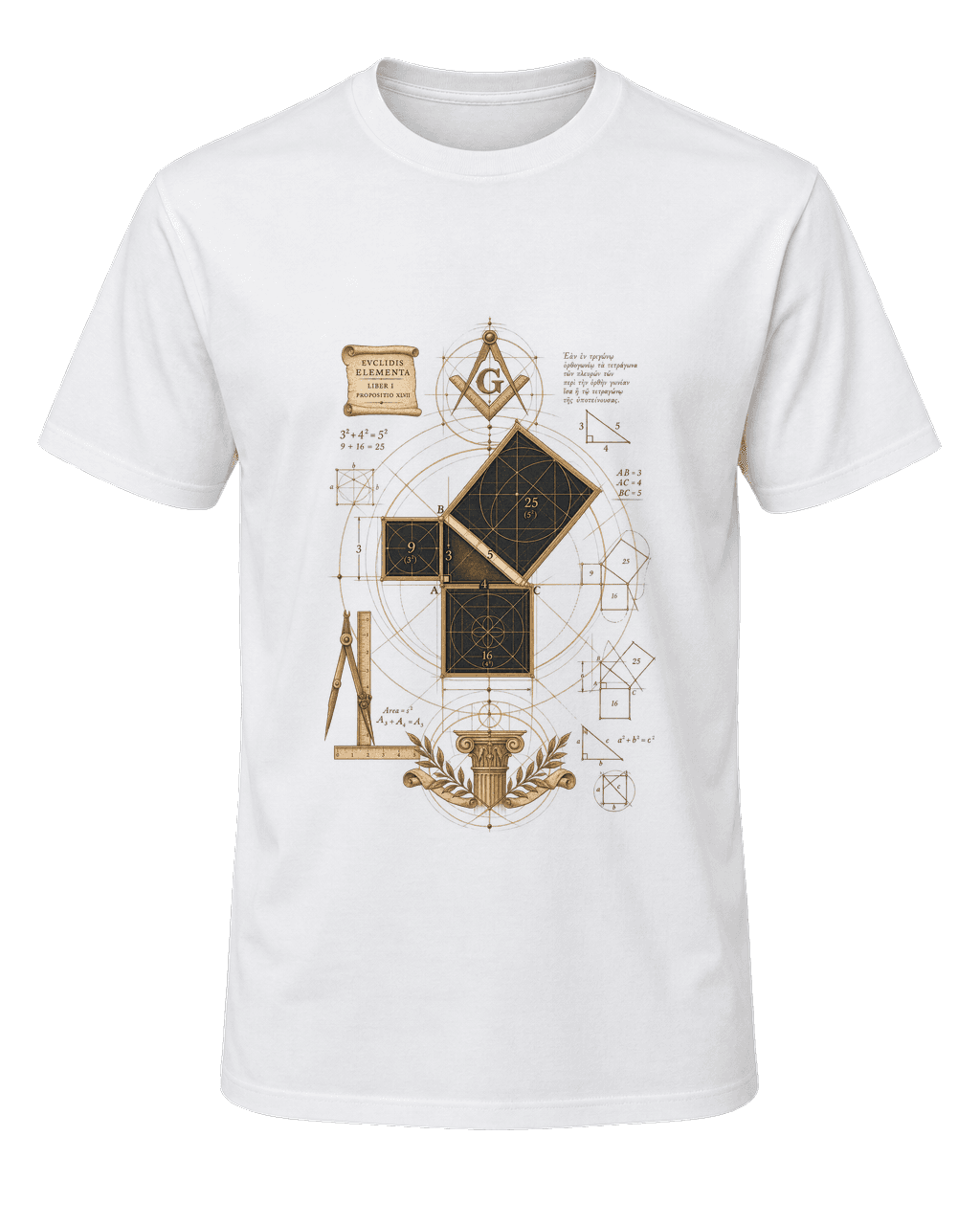
The proof that the square on the hypotenuse of a right triangle equals the squares on the other two sides, usually drawn as a 3, 4, 5 triangle with a square on each side. Masonic tradition credits it to Pythagoras and reads it as a call to be lovers of the arts and sciences. It is the figure on a Past Master's jewel in English lodges.
The acacia
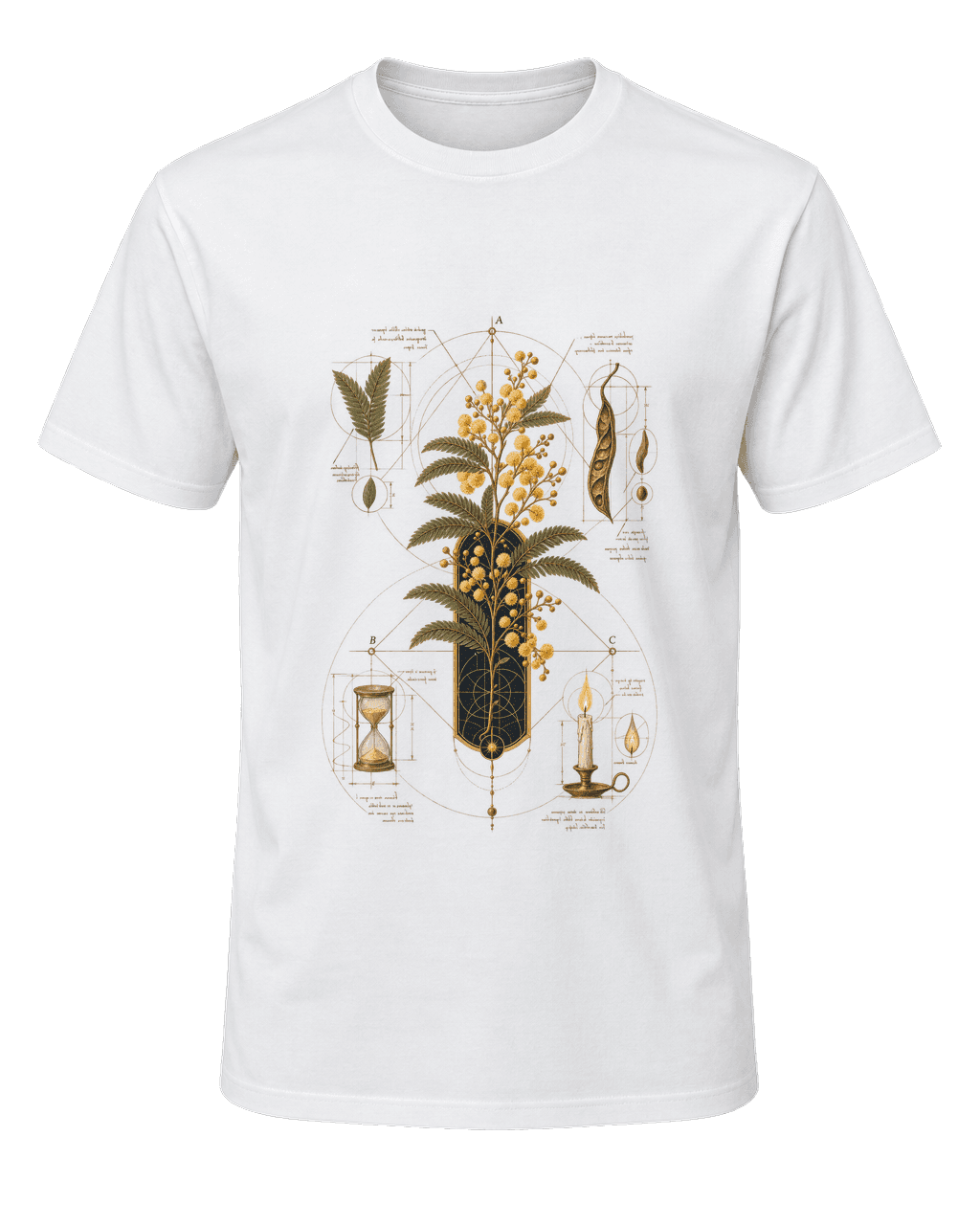
A sprig of acacia, the evergreen of the Holy Land, is the Masonic emblem of the immortality of the soul. It belongs to the third degree and to Masonic funerals, where a sprig is often laid with the brother.
The beehive
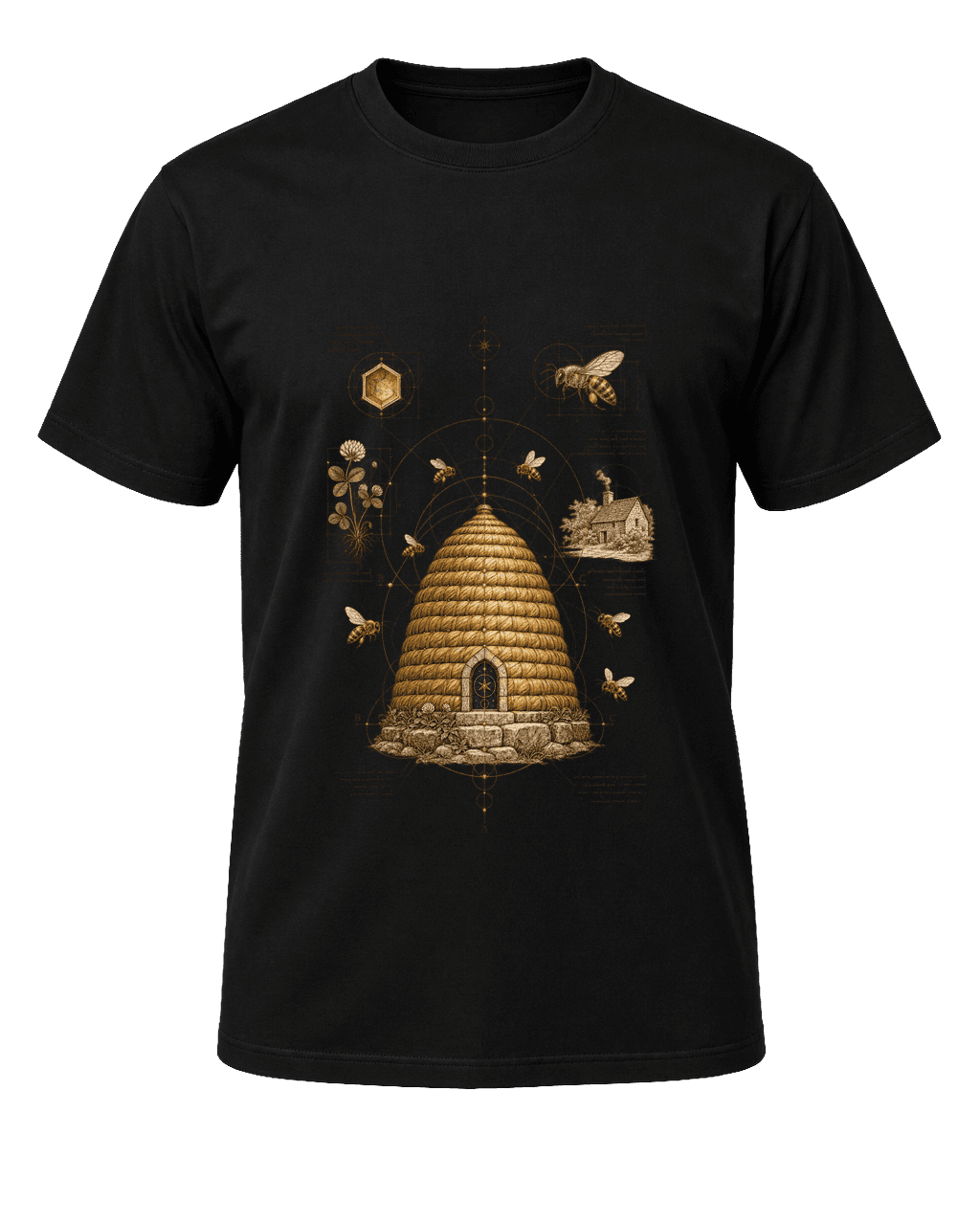
A straw hive with bees at work is the emblem of industry. It teaches a Mason to be a working member of society and never to sit idle while others labour. Utah took it for a state emblem for the same reason, which is why the Beehive State's own symbol is one the Craft shares.
The hourglass, the scythe, and the anchor and ark
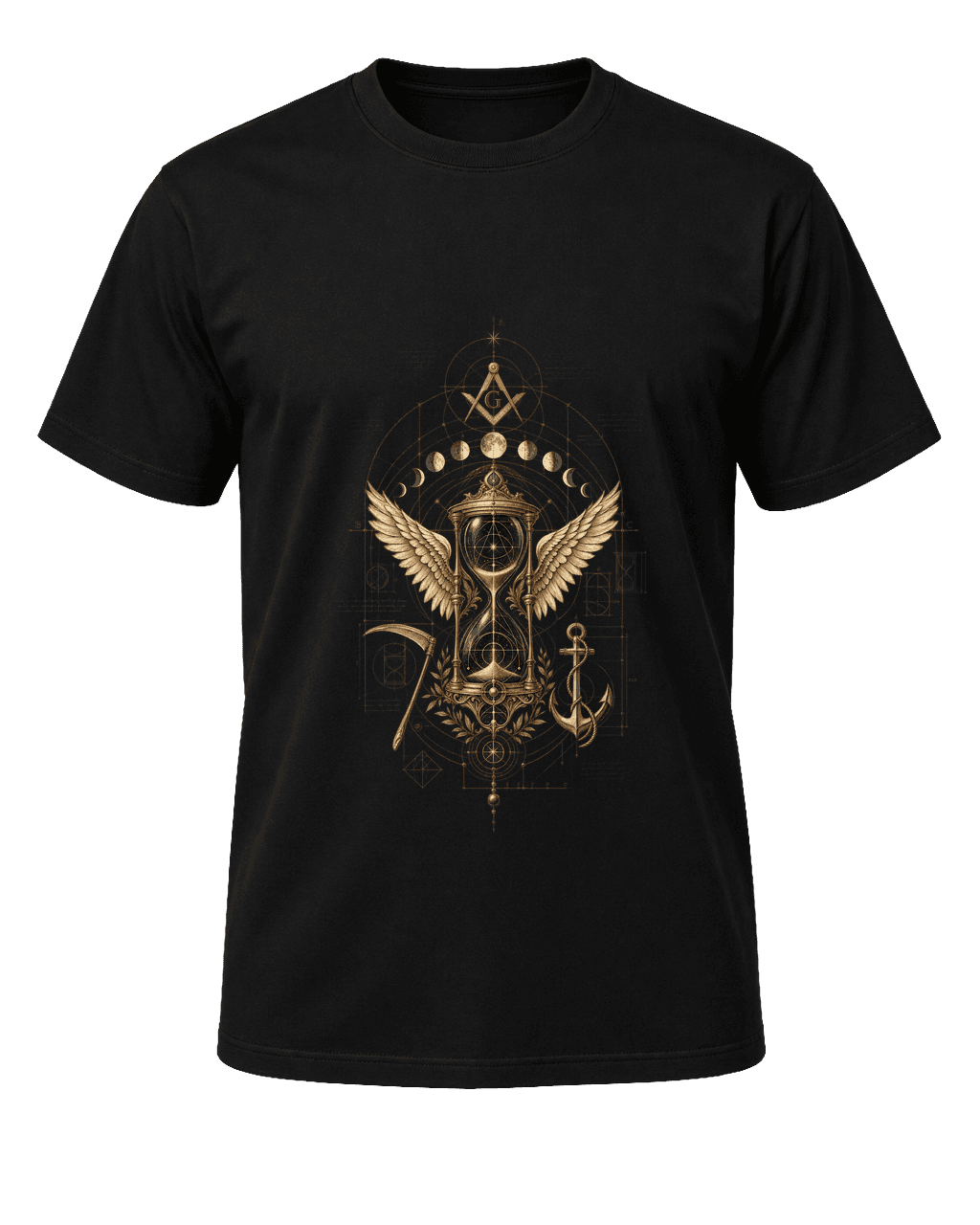
Three emblems of the third degree. The hourglass is an emblem of human life, its sand running whether or not anyone watches, and it is often drawn with wings for the speed of it. The scythe is time, which cuts the thread of life. The anchor and ark are hope and a well spent life, the ark that carries a man over the rough sea of his troubles and the anchor that holds him.
The winding staircase
Fifteen steps, in flights of three, five and seven, leading to the middle chamber of the temple. They belong to the second degree, and the numbers stand for the three officers who rule a lodge, the five orders of architecture and the seven liberal arts and sciences.
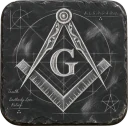
The letter G
Geometry, the science the operative craft was founded on, and God, the Grand Architect of the Universe. It hangs in the east of American lodges and sits in the centre of the emblem.
Questions
- What does the chequered floor in a Masonic lodge mean?
- The mosaic pavement represents human life, chequered with good and evil. The blazing star at its centre is Divine Providence and the indented border around it is the blessings that surround a life so lived.
- What do the rough and perfect ashlars represent?
- The rough ashlar is the stone from the quarry and represents the candidate as he comes to the lodge. The perfect ashlar is the stone squared for the builder and represents the man the Craft is meant to make of him.
- What does the acacia mean in Freemasonry?
- The sprig of acacia is the emblem of the immortality of the soul. It belongs to the third degree and is often laid with a brother at his funeral.